If you are a small business in the Philippines looking for the definitive answer to the “best” e-commerce platform, the reality is that you need a hybrid strategy: you must leverage marketplaces like Shopee and TikTok Shop to tap into their massive, built-in audiences, while simultaneously hosting your own dedicated WooCommerce website to protect your profit margins and build long-term brand authority on Google. Relying entirely on marketplaces means you are constantly losing revenue to their rising commission fees, but relying solely on a brand-new website makes it harder to get initial traffic. The businesses winning in 2026 are using marketplaces for discovery and their own website for retention.
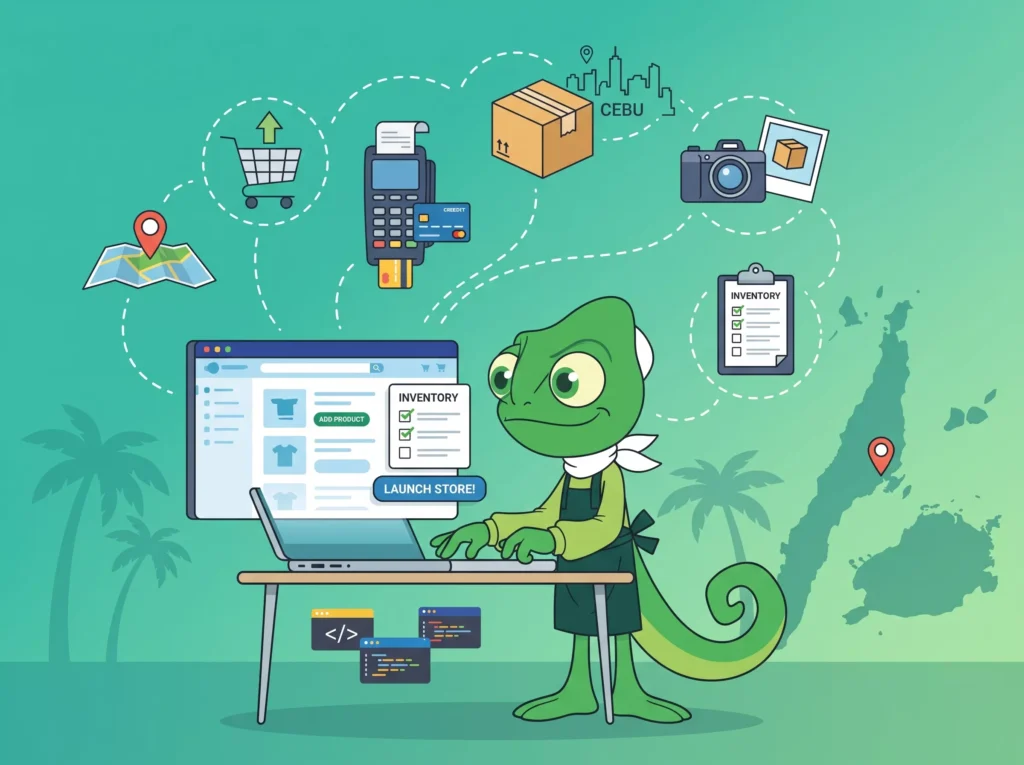
Here is the exact blueprint Modern Chameleon uses to build highly profitable, automated e-commerce architectures for local SMEs in the Philippines.
The Definitive Core: Shopify vs. WooCommerce
When a local business wants to build their own dedicated brand website, the choice always comes down to Shopify or WordPress (WooCommerce).
While Shopify offers a streamlined, easy-to-use setup out of the box, it comes with a major catch: monthly USD subscription costs and built-in transaction commission fees. For a small Philippine business, those fees eat directly into your hard-earned margins.
At Modern Chameleon, we highly recommend WooCommerce for your dedicated brand website.
- 100% Profit Retention: WooCommerce itself does not take a cut of your sales.
- Local Hosting Flexibility: You can host it locally for a fraction of the cost of a Shopify subscription.
- Scalability: While some premium plugins cost money, the foundational tools are free, allowing you to scale without being trapped in a tiered subscription model.
The Marketplace Balance (Shopee, Lazada, TikTok)
Filipinos are deeply conditioned to shop on Shopee and TikTok. You absolutely must list your products there because those platforms act like massive digital malls—they bring the foot traffic to you. However, their commission fees are aggressive and constantly climbing.
The Strategy: Use a pricing arbitrage strategy. Keep your presence active on Shopee and TikTok to acquire organic sales, but strategically price your items slightly cheaper on your WooCommerce website. For example, if you run a campaign, offer a permanent 20% discount if they buy directly through your official site. Once a customer discovers you on TikTok, you train them to buy directly from your website to save money, bypassing the marketplace fees entirely on all their future orders.
Explore how the financial and operational variables stack up across the major platforms:
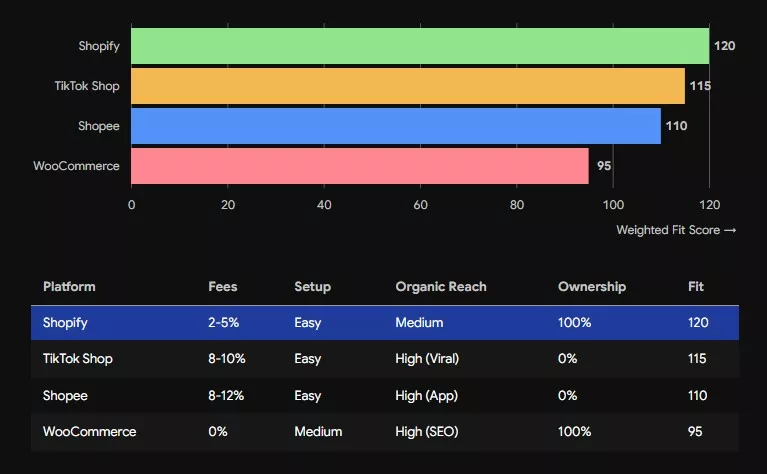
Key insight: Marketplaces are for customer acquisition; your website is for customer retention and profit maximization.
Integrating Local Payments and Logistics
Friction at checkout is the number one reason local customers abandon their carts. You need to offer the payment methods Filipinos actually use without requiring them to upload manual screenshot receipts.
- Payment Gateways: We integrate PayMongo and Xendit. Both require only standard DTI and BIR documentation to activate, and they plug flawlessly into WooCommerce and Shopify. This allows your customers to check out instantly using GCash, Maya, or bank transfers.
- Logistics & Fulfillment: For localized, same-day delivery within a city, integrate directly with Lalamove or Move It. For provincial or nationwide shipping, J&T Express and GoGo Xpress offer the most reliable API integrations to calculate shipping rates dynamically at checkout.
Escaping the “Facebook DM” Trap
Many local SMEs still operate their business by manually replying “PM sent” to hundreds of Facebook comments. This is an operational nightmare. Customers want instant gratification—if they have to wait two hours for you to reply with a price, they will buy from your competitor.
The Agency Fix: We deploy AI automation using tools like ManyChat. When a user messages your page asking about a product, the AI instantly replies, answers their basic FAQs, and funnels them directly to your e-commerce platform via a trackable link where they can check out immediately.
Case Study: MCIA Group’s Funnel Transformation
One of our clients was drowning in manual inquiries. Customers would message them, staff would manually call or reply, and highly qualified leads would get lost in a messy inbox alongside casual window shoppers.
We engineered a custom ManyChat sequence that immediately engaged the user and directed them to a highly structured lead-capture form. This eliminated the unsure buyers and funneled only highly-qualified, intent-driven customers directly to their sales team. You can read the full breakdown of this transformation on our Works portfolio.
The True Cost of Launching
If you are serious about migrating from a chaotic Facebook inbox to a structured e-commerce system, a realistic starting investment with a professional agency begins at around ₱20,000.
This baseline covers the foundational setup, including your own brand website, payment gateway integrations, and structural alignment with multiple marketplace channels. Attempting to DIY this infrastructure often costs business owners hundreds of hours in lost time, broken plugins, and botched logistics setups—time that should be spent actually running the business.
SEO & The 2026 AI Search Era
Setting up a Shopee store does not help your Google ranking. As Google rolls out its new AI Search (Search Generative Experience), it prioritizes authoritative businesses that own their data.
Google’s AI cannot scrape the deep architecture of a TikTok Shop, but it can read the structured schema data of a well-engineered WooCommerce site. Having your own website ensures that when a user searches “best [your product] near me,” Google’s AI pulls your FAQs, your product pricing, and your brand directly to the top of the search results.
Stop Losing Margin to Marketplaces. Own Your Infrastructure.
If you are tired of paying massive commission fees and manually replying to Facebook DMs, it is time to build a digital asset that belongs entirely to you. Book a FREE Consultation with us!
Frequently Asked Questions (FAQ)
Can I run WooCommerce and a Shopee store at the same time?
Yes. This is the optimal omnichannel strategy. You use Shopee for broad audience discovery, and your WooCommerce site as your official brand headquarters where you can capture higher profit margins.
How long does it take PayMongo to approve my store?
Once you submit your valid DTI/SEC registration and BIR documents, approval and API integration typically take between 5 to 7 business days.
Do I have to pay WooCommerce a percentage of my sales?
No. Unlike Shopify or Shopee, WooCommerce does not take a percentage commission on your sales. You only pay standard transaction fees to your chosen payment gateway (like PayMongo).